

Special Education Law
The Firm represents families in New York and New Jersey in matters involving the rights of children with disabilities under the Individuals with Disabilities Education Act (IDEA) and Section 504 of the Rehabilitation Act. Representation focuses on ensuring that students receive a free appropriate public education (FAPE) and that their rights are protected throughout the IEP, IESP, and 504 process.

Early Resolution & Dispute Avoidance
The Firm assists families in resolving special education disputes at the earliest possible stage, including preparation for meetings with school districts, written advocacy, and guidance during resolution sessions when appropriate.

Due Process Hearings
The Firm represents families in due process proceedings and impartial hearings in both New York and New Jersey concerning identification, evaluation, programing, placement, and services. Services include case strategy, preparation for resolution sessions and hearings, coordination with expert witnesses, and advocacy throughout the impartial hearing process.

Litigation of Funding Claims
The Firm handles complex special education matters involving tuition reimbursement and prospective funding for private special education placements when school districts are unable to provide an appropriate program. This includes preparing for and litigating impartial hearings, pursuing negotiated resolutions, and guiding families through the legal process.

IEP & 504 Guidance
The Firm educates and empowers families to understand their rights and obligations under the IDEA and Section 504. Services include preparation for and follow-up after IEP and IESP meetings, review of IEPs, IESPs, and 504 plans for legal compliance and educational adequacy, and strategic guidance when disputes arise.

Discipline & Manifestation Determination Reviews
The Firm represents families in matters involving school discipline, including suspensions, removals, and expulsions of students with disabilities, and advocates during manifestation determination reviews to ensure compliance with IDEA protections.
Specialized Transportation
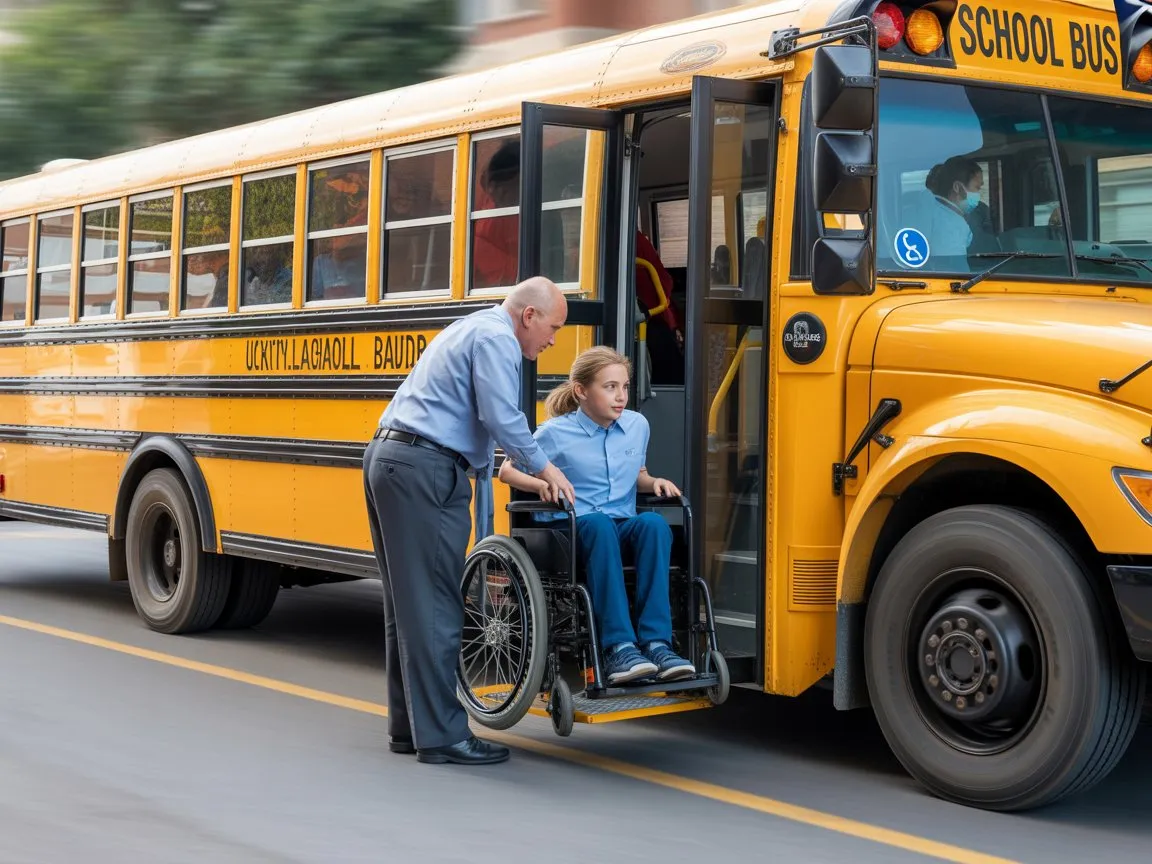
The Firm advocates for appropriate transportation services as a related service under the IDEA and Section 504. This includes addressing disputes involving specialized transportation needs such as door-to-door service, specialized vehicles, aides or monitors, routing and scheduling concerns, and necessary transportation to out-of-district or nonpublic placements for access to FAPE.

Referrals to Providers, Evaluators, and Schools
The Firm connects families with trusted professionals, including independent evaluators, related service providers, and specialized schools, to support informed educational decision-making.

Workshops & Speaking Engagements
Workshops and speaking engagements for parent groups, schools, and professional organizations on topics including special education law and the IEP process.

School & District Consulting
In addition to representing families, the Firm works with school districts and private schools to strengthen special education practices, including guidance on policy development, documentation procedures, compliance with IDEA and Section 504, and training for administrators, teachers, and staff.